
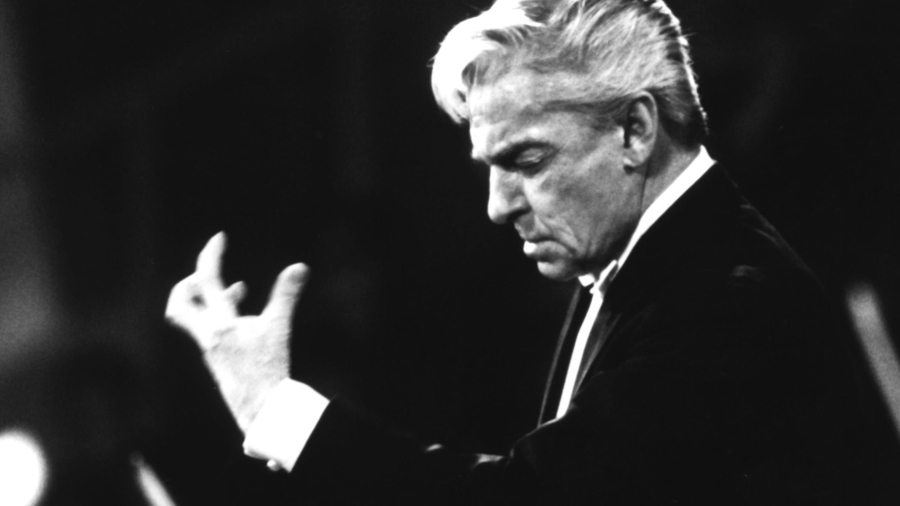
I was sitting on my couch some years ago, listening with my eyes closed to Ludwig van Beethoven’s Ninth Symphony. The stereo was turned up just a bit too loud for the neighbours, I think, but I could feel the low strings and the tympani resonate through my body like a force of nature. Then, the tenor soloist proclaimed in a voice of perfect purity, “O Freunde, nicht diese Töne! Sondern laßt uns angenehmere anstimmen, und freudenvollere,” introducing the “Ode to Joy,” Friedrich Schiller’s immortal hymn to universal brotherhood.
It is one of the most sublime moments in all music; the choral movement of Beethoven’s last symphony has, in the two centuries since its first performance, come to embody all that was and is good and true in the Enlightenment project of universality, rights and freedom:
Joy, thou beauteous godly lightning,
Daughter of Elysium,
Fire-drunken we are entering
Heaven, thy holy home!
Thy enchantments bind together,
What custom did sternly divide,
Every man becomes a brother,
Where thy gentle wings abide.
Leonard Bernstein conducted it at the Konzerthaus Berlin in 1989 to celebrate the fall off the Berlin Wall; the Polish philosopher Zygmunt Bauman chose it as his “national anthem” to emphasize his postnational identity; the European Union adopted it as the “Anthem of Europe.”
And, as I sang along, after decades of listening – “Freude, schöner Götterfunken
Tochter aus Elysium/Wir betreten feuertrunken/Himmlische, dein Heiligtum!” – I felt queasy. It came to me suddenly: the distinguished conductor on the record cover, in his tailcoat and white tie, his noble mane brushed back to reveal an aristocratic face, was Herbert von Karajan.
I think I had always known that Karajan had been a Nazi. Although he had been “denazified” by the allies after 1945, and he went to great lengths to hide his brownshirted past, denying party membership and declaring to the New York Times in 1955 “that he had ever been sympathetic to the principles of National Socialism,” the secret was soon out. In 1961, writing in the Times, Eric Salzman noted that the maestro was “an early joiner of the Nazi Party.” It would later come out that Karajan joined twice – in his native Austria in 1933, five years before the Anschluss, and again when he relocated to Germany two years later – just to be sure. He was a joiner.
When it came out that the celebrity conductor was that kind of joiner, both he and his many apologists insisted that he had only joined the Nazis to advance his conducting career. This was the early 1960s, and the crematoria and emaciated bodies of the death camps was a distant, 15-year-old memory, and who could blame a talented young artist for pursuing a career path out of Klaus Mann’s novel Mephisto in the interests of naked ambition? That hardly meant that he was a real Nazi, you know: the kind who wanted to exterminate all the Jews of Europe and make the Reich judenrein? He was a good Nazi, or at most, a naïve careerist!
That is the story that the Berlin Philharmonic, Deutsche Grammophon, and millions of classical music listeners chose to believe as he recorded more than a thousand records and sold hundreds of million copies worldwide – at least twice as much as any other conductor in history. He was, the marketing material told us, the greatest conductor of his generation and we should forgive, indeed ignore his youthful indiscretions.
But the story is an abject lie promoted by his record labels and admirers. The truth is that Karajan joined the Nazi Party in Austria in the spring of 1933, five years before the German annexation, when the Nazis would be able to help his career, and two years before the maestro’s move to Germany itself was even a possibility. In fact, Austria’s Fatherland Front government was deeply suspicious of National Socialism, and the budding maestro’s Nazi membership card would have been a distinct disadvantage, especially after Nazis assassinated the Austrian Chancellor Engelbert Dolfuss.
The fact is this: young Karajan joined the Nazi Party because he really wanted to be a Nazi and embraced their ideas. That he was able to leverage his membership to the advantage of his career, even becoming, like Mann’s Hendrik Höfgen, a favourite of Hermann Goering’s, was just icing on the cake. Herbert von Karajan was a Nazi.
That realization crashed into me with a wave of nausea as I realized that the man on the record cover who was leading the Berlin Philharmonic in this brilliant celebration of brotherhood, humanity, and peace wanted to exterminate my people. Maybe he had changed his mind by the time he recorded that symphony but I doubt it; for all of their public repentance, Nazis rarely went back on their core values, and Karajan went to great lengths to hide his past rather than atone for it.
I could not take pleasure or find jouissance in any art produced by a Nazi.
Yet this presented problems; some Nazis, it turned out were great artists. Though never a party member, Karl Böhm, one of the great interpreters of Mozart, was an enthusiastic promoter of Nazi propaganda and culture; Elisabeth Schwarzkopf, a lyric soprano with an angelic voice that can stop my breath, was a Nazi Party member, and leant her considerable talents to Nazi Party galas and entertaining Waffen SS units in the field in a kind of USO operation… And so many others too numerous to list. For all their brilliance, I can take no pleasure in listening to their versions of the “Jupiter” Symphony or Richard Strauss’s Four Last Songs.
So I have been working hard at denazifying my record and CD library. After more than four decades of acquiring music and not really thinking much about the talent behind the recordings, I have had enough. I can tolerate a lot – Glenn Gould’s weirdness, Fritz Reiner’s rages, Bruno Walter’s rigidity – but there are some things that I cannot tolerate. And chief among them is being a Nazi. Rather than keep a Nazi in my library, I have been pulling records and CDs as I come across them to sell on Discogs or just to donate to the local used record store. I don’t care if someone else listens to them, but I will not.*
I am sure that someone will protest that this is nothing but “cancel culture” or at least that I am depriving myself of the enjoyment of great art. But here is the thing: for me, art is an ethical, as well as an aesthetic, practice. We create art to improve and to heal the world, and we create music to find the beauty in sound (however we construe beauty) and to find the harmonies and rhythms of our humanity in all their variety. We sing the “Ode to Joy” in order to proclaim the possibility of our brotherhood in shared humanity. A Nazi cannot do any of this with anything resembling sincerity, by definition.
With regard to the talent that I will miss by excising Karajan, Böhm, Schwartzkopf and the others from my life, all I can say is that there are a great many conductors, musicians, and singers out there. Despite a reputation produced and paid-for by the Deutsche Grammophon marketing department, Karajan was not the greatest conductor in the history of music; he was only the most prolifically-recorded conductor, who produced so many records and CDs that his name became inevitable, like Kleenex. Why waste my time with him when I could listen to Walter, an anti-fascist and revolutionary, or Christoph von Donnanyi, Dietrich Bonhoeffer’s nephew, whose father led the anti-Nazi resistance… Or Sir Georg Solti, Leonard Bernstein, Rafael Kubelik, or so many others. I can listen to them and enjoy brilliant music without being overcome with bile.
They, at least, did not wish me dead.
* I will not tolerate rapists and abusers, either, which is why I have excised Charles Dutoit, Robert King, James Levine, and others, from my Library.